Fashion Month Autmn-Winter 2026 Between Heritage and Reinvention

The Autumn-Winter 2026 fashion season arrived at a moment of transformation for the industry. Across the major fashion capitals, the conversation was less about spectacle alone and more about how heritage houses are being reinterpreted by a new generation of creative directors. The shows revealed a landscape in motion, where the tension between legacy and innovation is becoming one of the defining forces shaping contemporary fashion.
Paris Fashion Week, as always, stood at the center of this dialogue. Rather than relying solely on dramatic reinventions, many designers focused on refining their vision, pushing the boundaries of house codes while still honoring the DNA that defines them. Craftsmanship and detail emerged as some of the most striking elements across the runways, with collections that demonstrated how innovation can sometimes happen through subtle transformations rather than radical change. Materials were reimagined, silhouettes softened or exaggerated, and traditional references were filtered through a contemporary lens.

Among the most talked-about shows of the week was Dior. Under the creative direction of Jonathan Anderson, the house presented a collection that felt both poetic and exploratory. The show unfolded in a setting reminiscent of a greenhouse, surrounded by water lilies, evoking the romantic imagery of Monet and the long tradition of Parisian gardens as spaces of contemplation. Within this environment, Anderson introduced a collection that explored a botanical universe, with flower-shaped silhouettes, delicate feather trims and textured fabrics that brought a sense of organic movement to the garments. Sequined denim, ruffled tailoring and sculptural details suggested a Dior that is not merely revisiting its past but reimagining it through a slightly surreal, contemporary perspective. The result was a collection that maintained the house’s signature elegance while pushing it into new, more experimental territory.


Chanel approached the season from a different angle, offering a demonstration of how innovation can emerge through detail rather than dramatic transformation. This is very true to Chanel’s identity, since it is a brand that has always invested a lot in heritage and consistency. The collection revisited some of the house’s most iconic elements, particularly the use of tweed, but reinterpreted them through new textures and materials. Iridescent threads, semi-transparent fabrics and unexpected finishes gave the classic Chanel suit a renewed sense of lightness and movement. Under Matthieu Blazy’s direction, the brand continued to explore the balance between continuity and evolution. Familiar elements such as structured jackets, two-tone shoes and camellia motifs remained present, but they were subtly altered through fabric experimentation and modern styling. The show highlighted Chanel’s enduring strengths, which is its ability to remain instantly recognizable while still evolving with each season.
While heritage houses anchored much of the conversation in Paris, the week also offered moments of surprise and experimentation from other designers. Several collections pushed creative boundaries through unconventional silhouettes, theatrical staging or unexpected material combinations, reminding audiences that fashion week remains a platform for bold artistic expression. These moments of unpredictability provided an important counterpoint to the more heritage-driven presentations, contributing to a season that felt both diverse and creatively energised.


Apart from these leading luxury brands a sense of surprise and theatricality was brought by Schiaparelli. Under the direction of Daniel Roseberry, the house continues to explore the surrealist legacy that has defined its recent revival. The collection blurred the boundary between couture and ready-to-wear, presenting sculptural silhouettes, exaggerated proportions and striking gold accessories that felt almost like wearable objects. Roseberry’s approach remains deeply rooted in Elsa Schiaparelli’s original fascination with art and surrealism, yet the execution felt distinctly contemporary. The show stood out for its dramatic visual language and its ability to transform fashion into spectacle without losing precision in tailoring and craftsmanship. The designer also show-casts his strong ability to transform fashion into more than just cloths, its designs always carry exceptional and unusual movements, evoking strong and impacting emotions during his shows.
Loewe also delivered one of the most memorable moments of the week. Jonathan Anderson has spent the past seasons refining a language that sits somewhere between sculpture, conceptual design and luxury craft, and the latest collection continued this exploration. Garments appeared almost architectural in structure, with unexpected proportions, innovative fabric manipulation and silhouettes that challenged traditional ideas of wearability. At Loewe, experimentation never feels purely conceptual; instead, it becomes a way to push the boundaries of how clothing can exist on the body. The show reinforced the brand’s reputation as one of the most intellectually compelling forces in contemporary fashion.

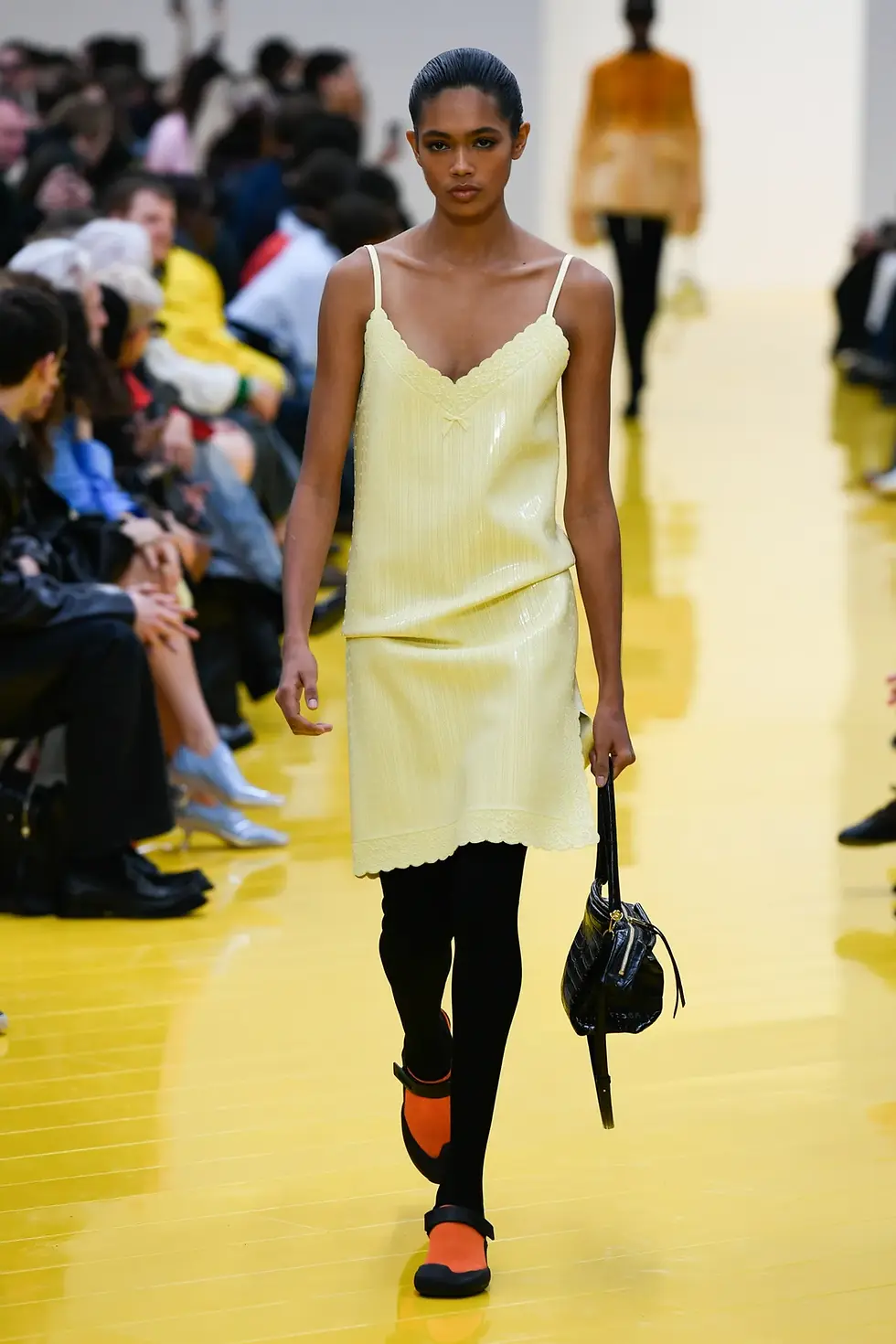
Beyond the individual shows, both the runways and the streets surrounding the venues revealed several emerging trends that will likely define the upcoming seasons. Street style during Paris Fashion Week suggested a move toward more nuanced, thoughtful dressing, where attendees favored subtle sophistication over overt spectacle. Tailored silhouettes, structured coats and carefully layered looks dominated the streets, often paired with bold accents such as vibrant red outerwear or lace-trimmed pieces that added a softer, romantic dimension to otherwise minimal outfits. At the same time, the return of distinctive prints and patterns signaled a broader shift toward visual richness in fashion. Designers and trend forecasters point to the rise of new animal-inspired motifs, such as deer or “Bambi” prints, as well as dimensional florals, clashing geometric patterns and ornate scarf-inspired graphics. These motifs reflect a growing appetite for maximalism and storytelling through textiles, where garments become visual narratives rather than simple wardrobe staples. Together, these elements suggest that the coming seasons will balance refined tailoring with expressive pattern play, merging understated elegance with a renewed sense of creativity and experimentation.
If Paris emphasized refinement and craftsmanship, Milan Fashion Week revolved around a single, highly anticipated moment: the debut of Demna at Gucci. The appointment of the designer, widely known for reshaping contemporary fashion during his time at Balenciaga, immediately positioned the show as one of the most closely watched events of the season. Gucci has spent the past few years navigating a period of transition, and Demna’s arrival signaled an attempt to redefine the brand’s direction and cultural relevance.
The collection itself introduced a markedly different atmosphere from previous Gucci eras. Darker silhouettes, exaggerated proportions and a sharp blend of luxury and streetwear aesthetics created a world that felt both provocative and deliberate. Demna’s approach suggested a desire to reposition the brand within contemporary culture, emphasizing attitude and visual impact over traditional Italian glamour. The show reflected his signature design language, combining irony, bold silhouettes and a certain dystopian undertone that has become closely associated with his work.
Yet the debut quickly sparked debate across the fashion industry. For many observers, the collection confirmed Demna’s reputation as one of the most influential designers of his generation, capable of reshaping fashion narratives and capturing the cultural moment. Others, however, expressed concern that the aesthetic leaned too heavily on the visual codes he developed at Balenciaga. Critics questioned whether this approach risked diluting Gucci’s identity, replacing its historic sensuality and eclectic elegance with a darker, more confrontational aesthetic.
This tension reflects a broader question currently shaping the luxury industry. As creative directors move between houses and increasingly influence brand narratives, the role of the designer has evolved dramatically. Today, a designer’s personal vision often carries as much weight as the heritage of the house itself. When a creative director changes, the identity of the brand can shift almost instantly, sometimes bringing renewal and sometimes provoking uncertainty.

The Autmn-Winter 2026 season ultimately revealed an industry in transition. Creative directors are moving more frequently between major houses, ownership structures are evolving, and brands are constantly negotiating the balance between commercial success and creative experimentation. Within this environment, the figure of the designer has become increasingly central to the identity of a brand.
In many ways, fashion today raises a compelling question for the future of luxury: is the designer becoming the true brand? The answer remains complex, but one thing is certain, as the latest fashion month demonstrated, the industry is entering a period defined not by stability, but by constant reinvention.


Comments